


We just crossed 75 subscribers in three months. I’m excited, grateful, and even more driven to keep producing quality work.
The audience here is wide-some of you are industry veterans with decades of fintech experience, while others are completely new to the money movement world. I’ll do my best to keep writing in a way that speaks to both ends. (Feel free to shoot strategies to expand my reach even further)
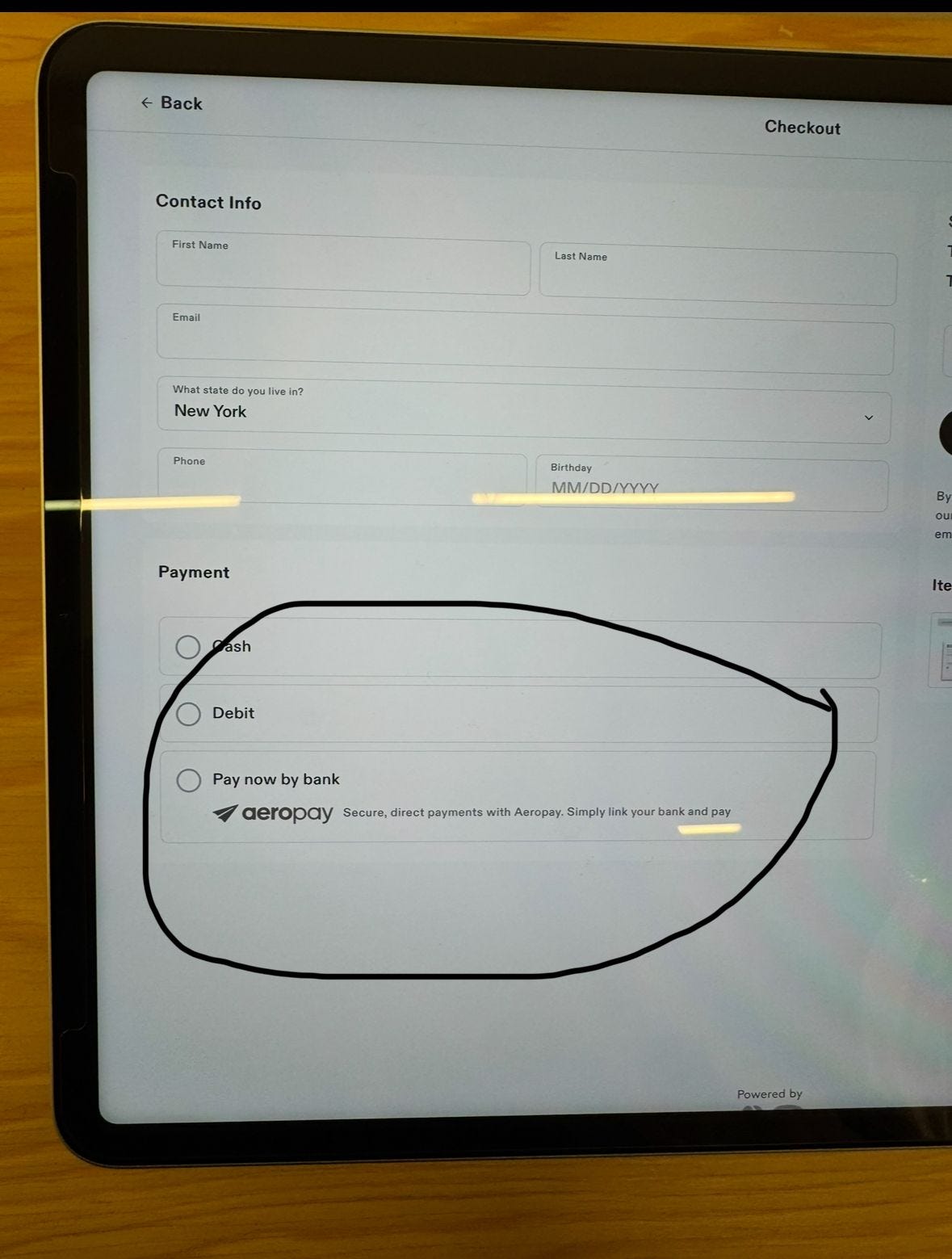
Last week’s Pay by Bank article picked up a lot of traction. Some of you shared it with your networks, and I was thrilled when people reached out with questions. A friend who’s starting a small business told me how tough payment acceptance has been for her, especially with the card fees eating into already thin margins. Another friend sent me a photo of Aeropay (a Pay by Bank provider) at a dispensary in NYC. He’s been using Aeropay for a while but only after reading the piece did he realize what was happening behind the scenes. (For the record, I don’t endorse substances on this platform, it’s just an example of Pay by Bank in action.)
It’s been an eventful week unpacking Pay by Bank, and the best part is I haven’t run out of things to write about yet. So in this week’s article(4th in the PBB series), I will expand more on which industries have be proactive in adopting PBB as well as what worked and what maybe the hurdles for a wider adoption and success.
TLDR:
Telecom leads adoption: Major carriers like Verizon require bank account or debit card payments for autopay discounts, avoiding credit card interchange fees worth billions annually.
Airlines testing selectively: European carriers like Ryanair offer 5% cashback for Pay by Bank, leveraging open banking regulations to reduce transaction costs on high-ticket purchases.
Gaming shows promise but faces barriers: Digital-native gaming consumers accept alternative payment rails, but fraud prevention and regulatory complexity limit widespread adoption.
Success requires incentives: Effective merchant adoption pairs cost savings with consumer benefits like discounts, cashback, or faster settlement.
Regulatory environment matters: European open banking regulations provide clearer frameworks than fragmented U.S. approaches, enabling faster merchant adoption.
Introduction:
Pay by Bank allows consumers to pay merchants directly from their bank accounts, bypassing traditional card networks. Instead of using credit or debit cards that route through Visa, Mastercard, or other card processors, consumers authenticate with their bank and authorize direct transfers.
Merchants care about Pay by Bank for three primary reasons:
Interchange Cost Savings (eliminating 1.5-3.5% card processing fees),
Faster Settlement (funds arrive in 1-2 days versus 3-5 days for cards), and
Reduced Fraud Risk (bank-authenticated transactions with lower dispute rates).
Nilson Report indicates that in 2024, swipe fees (across both credit and debit) for Visa and Mastercard credit cards reached $111.2 billion, up from approximately $100 billion in 2023.
Identifying "natural fit" industries matters because successful Pay by Bank adoption requires overcoming consumer payment habits. Early adopters need compelling economics to justify the friction of changing established payment behaviors.
Framework: What Makes an Industry Low-Hanging Fruit?
Four factors make industries attractive for Pay by Bank adoption:
High-ticket or recurring payments create meaningful interchange savings that justify implementation costs and consumer incentives. A merchant saving 2.5% interchange on a $1,000 airline ticket ($25) has more room for consumer incentives than one saving 2.5% on a $20 purchase ($0.50).
Strong existing direct-to-consumer relationships through apps, websites, or customer accounts enable merchants to communicate benefits and guide payment method changes without relying on third-party payment processors or point-of-sale systems.
Lower reliance on card-based loyalty economics means merchants can shift payment methods without disrupting reward programs. Industries heavily dependent on credit card points or cashback programs face more complex tradeoffs.
Consumers already accustomed to ACH/bank rails through existing direct debit relationships (utilities, mortgages) or peer-to-peer payments (Venmo, Zelle) show higher comfort with bank-based payment methods.
In this article, I will expand on Telecom, Travel, and Gaming as successful use cases.
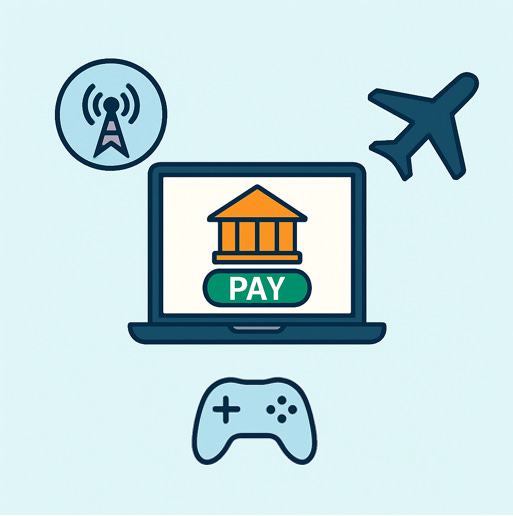
Case Study: Telecom
Why Telecom is a Natural Candidate?
Telecommunications represents ideal Pay by Bank economics: recurring monthly payments ($50-200+ per account), massive payment volumes across millions of customers, and thin margins that make interchange fees particularly painful. Verizon was the first to require customers to link to a debit card or a bank account to receive a $10 monthly AutoPay discount with some phone plans, signaling strong merchant motivation to shift payment methods.
What Is Working?
Autopay incentives proved effective at driving adoption. Verizon requires bank accounts or their branded Visa card for autopay discounts, while T-Mobile offers monthly bill credits for up to eight lines when AutoPay uses eligible payment methods. These discounts directly share interchange savings with consumers, aligning incentives.
Bill credits provided clear, recurring value that justified changing payment methods. The $10 monthly discount for bank-based autopay represents $120 annual savings, exceeding typical credit card cashback on telecom spending.
Established direct relationships enabled carriers to communicate changes through existing billing channels, mobile apps, and customer service touchpoints without requiring third-party coordination.
Where Are The Hurdles?
UX friction around bank account setup created abandonment points. Verizon partnered with Trustly to streamline pay by bank implementation in retail stores as a "natural progression" from online adoption, suggesting initial digital experiences needed improvement.
Churn concerns emerged as some customers preferred maintaining credit card payments despite missing discounts, indicating limits to price sensitivity in payment method selection.
Case Study: Airlines
Why Airlines are Promising?
Airlines handle high-ticket transactions where interchange savings create meaningful value. A typical $500 domestic ticket carries $12.50 in interchange fees at 2.5% rates, while international flights averaging $1,000+ generate $25-35 in fees. Global reach and digital-native booking processes provide implementation advantages.
What Is Working?
Bank transfer in European markets benefited from open banking regulations. Ryanair partnered with TrueLayer to introduce Pay by Bank at checkout, offering customers faster, more secure and "seamless" payments. The carrier offers 5% cashback for Pay by Bank selections, directly sharing interchange savings.
Lower processing fees create compelling unit economics. Open banking transactions incur no interchange or card scheme fees, with payment providers typically charging fixed per-transaction rates in European markets.
IATA industry support provided standardization. IATA Pay developed as an industry-supported initiative for airline website purchases, enabled by European PSD2 and UK Open Banking regulations.
What Are The Hurdles?
Refund handling complexity limited adoption. IATA Pay testing focused on developing refund features as key value proposition enhancements, indicating operational challenges with reverse payments.
Loyalty points tied to cards created switching barriers. Many frequent flyer programs offer bonus miles for credit card spending, complicating the value proposition for Pay by Bank alternatives.
Geographic limitations restricted scalability. European open banking regulations enabled adoption, but similar frameworks don't exist in major markets like the United States.
Case Study: Gaming & Digital Entertainment
Why This Industry Has Potential?
The video game industry generates nearly $60 billion in revenue in 2024 in the United States alone and $190 billion globally. Digital-native consumers show comfort with alternative payment methods, while in-app purchase revenue is projected to grow to $285 billion by 2026, creating scale opportunities.
What Is Working?
Instant deposits/withdrawals appealed to gaming consumers who value speed. Chicago-based Aeropay targets cannabis and gaming payments as alternatives to traditional card networks, focusing on industries where card networks have limitations.
Open banking rails in Europe provided regulatory frameworks for implementation, similar to airline adoption patterns.
High-frequency users showed willingness to adopt new payment methods when incentivized through reduced fees or faster processing.
What Are The Hurdles?
Fraud and KYC issues created operational challenges. Gaming transactions have drawn regulators' attention due to issues related to consumer protection, data privacy, and financial crime, increasing compliance burdens for alternative payment methods.
Regulatory complexity around gaming payments varies significantly by jurisdiction, making standardized Pay by Bank implementation difficult across markets.
Small transaction sizes in many gaming scenarios (micro-transactions under $10) provide limited interchange savings to fund consumer incentives or absorb implementation costs.
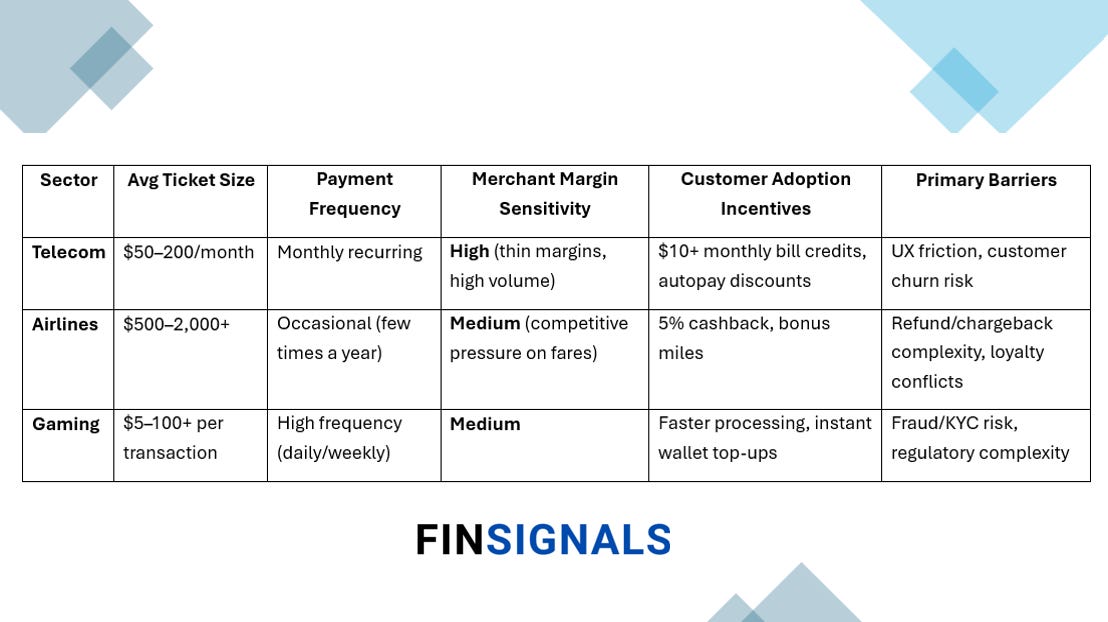
Cross-Industry Comparison:
Aeropay at the checkout that my friend had sent:
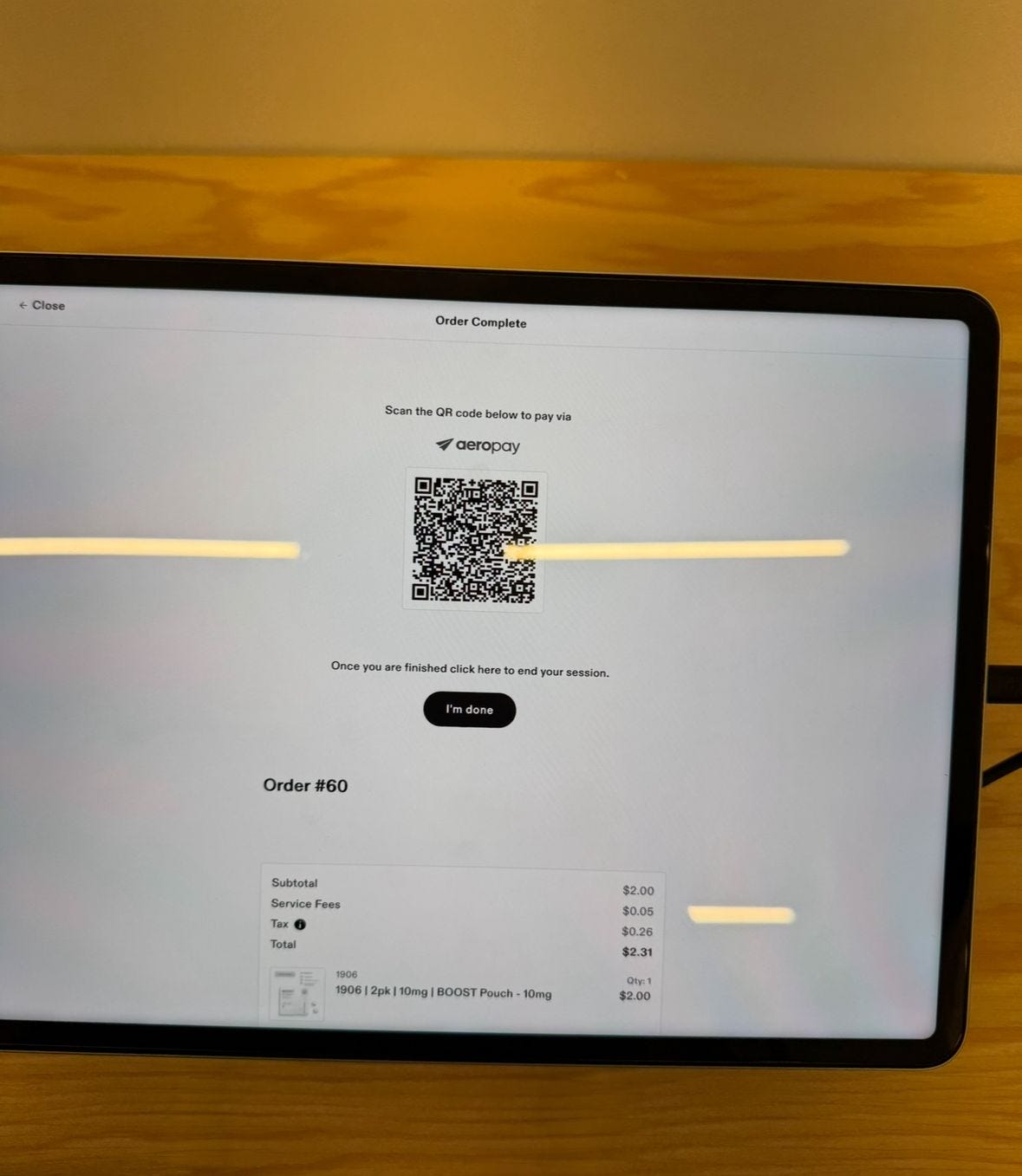
It would be good investigative journalism to go visit a dispensary and use PBB at checkout(and well, not buy anything). But if you want to make my life easier let me know if you have ever paid using PBB at a checkout, any stores other than dispensaries that I can go a try out irl.
My next article might not be on PBB, I don’t want to bore you too much. But in the next article in the PBB series, I will expand on what other industries might have great chance at PBB adoption. I might or might not be thinking about expanding on Stablecoins next week. But you gotta wait until next Monday to see my labor (Monday is Labor Day, gettit??)
Checkout my previous PBB articles:
1. Pay by Bank: Can It Really Compete with Cards?
2. Pay by Bank in the US: How Plaid, Aeropay are leading the charge
3. Disrupting the Swipe Fee: The Financial Case for Pay by Bank
Sources:
TechCrunch - "Cannabis industry and gaming payments startup Aeropay is now offering an alternative to Mastercard and Visa" (May 16, 2024)
Federal Reserve Bank of Kansas City - "Game Changer: The Evolution of Video Games' Payments Infrastructure" (April 9, 2025)
Verizon Support Documentation - Auto Pay FAQs and Payment Methods
T-Mobile Support Documentation - AutoPay Service Information
PYMNTS.com - "Exclusive: Verizon and Trustly Unlock Pay by Bank at Retail" (June 4, 2025)
Payments Dive - "T-Mobile, AT&T follow Verizon on discouraging credit cards for bill-pay" (August 10, 2023)
Open Banking Expo - "European airline Ryanair partners with TrueLayer to offer Pay by Bank" (December 11, 2024)
IATA - IATA Pay service documentation
Open Banking Expo - "New payment method for airline tickets possible with Open Banking" (April 1, 2019)
UATP - "Fast, safe and cost-effective: open banking for travel payments" (January 16, 2024)
Aeropay - "Open Banking in the U.S." guide (2023)
J.P. Morgan Insights - "Revolutionizing Gaming via Connected Payments"
#Fintech #Payments #MoneyMovement #DigitalPayments #FutureOfPayments #PayByBank #OpenBanking #BankPayments #ACH #RTP #FedNow #Telecom #Airlines #GamingIndustry #DigitalEntertainment #Ecommerce #SwipeFees #Interchange #MerchantSavings #Cashback #PaymentInnovation #RegTech #FraudPrevention #FintechCommunity #FintechInsights #FintechNews #FintechStrategy
Great article Chandana!
Really enjoyed this breakdown. The way telecom has paired recurring autopay discounts with Pay by Bank feels like the cleanest incentive alignment so far. Consumers see tangible value while carriers capture interchange savings. The contrast with airlines and gaming shows how much regulation and loyalty dynamics can make or break adoption. Curious to see if U.S. merchants can overcome the same hurdles without the regulatory clarity Europe benefits from.